How To Play Against All Types of Players


If you are a winning cash game player, your profits come from outplaying weaker opponents. If you are a barely winning player, it means you are barely better than recreationals, but worse than other winning players.

 If you are a regular with a good winrate it means you are better at winning more money from recreational players, while also probably not losing money to regs.

 If you are an elite Short Deck player with a 20+bbEV win rate it means you are winning the maximum from recreationals and even winning from weak regs, who, while being able to win at around 5-7bb win rate, probably play too obvious versus regs and are vulnerable to being exploited by better players.

The quickest way to improve your win rate is to become tough to play against versus regs, at least as much as they don’t target you, and to win the maximum from recreationals. 

To do that, the first thing you should learn is to classify recreationals in many, deeper categories. Not just ‘’fish’’ or at best ‘’aggro fish’’ and ‘’calling station’’. In this article I will attempt to show the categories you should use for recreationals and how to win the maximum money versus each group. 


Passive, station ABC recreational

As a Short Deck player, you want these guys at your table the most. These are players who play a lot of hands preflop and call ISO out of position a lot to try to flop something. They play very obvious postflop. They will call along if they flop something average and will raise and fast play their good hands, because they are scared of turns and rivers, without considering opponents ranges etc. 

An example of a typical play from this type of player would be limp / calling 8c9h preflop 100ante deep vs a 9a ISO and a call from another player. Then check / calling on KcTc6c versus a bet and a call, because a club gives them a flush and a 7 gives them a straight. Then check / calling 8x turn versus a bet and a call, because now his hand has improved to a pair + draws. 

In this player’s head, he hasn’t done anything wrong. He called preflop 89o because it is connected and can make straights. He called on the flop, because now he can make straights or flushes on the turn. He called on the turn because now he also has a pair. But an experienced player will recognize that this player made a mistake preflop, because 89o plays badly postflop, especially out of position

In postflop situations, you should avoid letting him control the action. Regs will often try to call all-in jams with marginal hands because they see that the player is aggressive, but once again, you have to consider their range and whether aggro fish is betting allin with weak hands. Often these guys will stab flop and turn very loose but will have a decent range when they decide to go allin. 

Avoid slowplaying too much because in 6+ equities can change very quickly. And don’t be afraid to make some resteals if you are playing against a player who stabs too loose. If you have this type of player, you want to target him. If possible, you want to get a position on him, so you can play in more hands against them. 

Versus this type of player you want to ISOlate preflop to try to get in a situation postflop, where you are heads up against him, with position and range advantage. Then on the flop, it will be easy to get value when you have a better handand it will be easy to get away from a hand when he shows aggression. 

It’s important to distinguish between a card chaser and a calling station. Card chasers will become a lot more passive once the river comes, while calling stations are happy to call all streets, even if the river bet is all-in and he is not that strong. So versus calling stations, you want to ISOlate and bet value, but versus these ABC recreational, high VPIP card chasers, you will do a lot of bluffing actually. That’s because they will be very honest when they are not strong and you can use this to steal pots. And since it’s 6+ holdem, all pots are big due to antes, so stealing pots is more profitable compared to regular hold’em. 

Below is an example where you should fire 3 bullets versus this type of player:

Preflop 100a deep: rec limps CO, you ISO BTN 9a, he calls CO, everyone else folds

Flop 679, he checks, you bet 9a, he calls

Turn K, he checks, you bet 21a, he calls

River 6 and he checks and you bet allin

If you have a type of player who fastplays his hands on the flop, because he is scared of draws, this is a great spot to bluff. Since he is check / raising his sets and straights on the flop he is very capped in this spot.

K on the turn and 6 on the river doesn’t help his range much, because he doesn’t have a lot of Kx on his flop check / calling range and he doesn’t have a lot of 6x in his preflop calling range. So he will mostly have hands like 78, 98, 1010 etc. These hands he will probably fold to a river bet because from his point of view, there is so much that beats his hand. Straights, full houses, AK etc. He will not consider that in your range you have almost no straights or fullhouses except KK. 

This might seem like a very specific example but I see these type of players a lot. The biggest mistake to make against these guys is to fire 2 bullets and stop, since he will be calling more flops and turns than the average player. You can also adjust by checking turns with a semi draw, and then see what he does on the river.


Regulars

No one likes playing against good players, but as long as there are recreationals there will be regs. The good news is, regs are often easier to put on a range, since you know how they play. 

Especially on lower stakes, some regs might be as easy to play against as fish, since they play a very obvious exploitative strategy that works well versus fish, but they are losing money to regs by not being balanced. 

Some regulars, especially the ones who are taking a shot at higher stakes will try to avoid playing pots versus other regs or will decline taking those high variance spots that are more ev+, instead choosing to softplay other regs in hopes that they will do the same. But this is a mistake for 2 reasons. 

  1. The elite regs will take these slightly more ev+ spots even if they are higher variance (like if checking down is +0.5bb but bluffing and jamming river is +1.5bb). So in the long term, you will be losing more money to them by avoiding these spots than by taking the highest ev+ option every time. 
  2. If you find a reg who is avoiding playing pots versus you and who is avoiding these high variance spots when playing you, it means you can win even more from him if you do decide to play as tough as possible versus him. It means this other reg feels uncomfortable in these high variance spots and will probably overfold.

    That also works in multiway pots. Let’s say you are playing a 3 handed pot versus a weak reg and a fish. Reg makes a standard c-bet, fish calls and you have a hand where raising is slightly better than calling but obviously, a higher variance play. The added bonus is that if the weak reg is holding a hand where he is supposed to call your raise and then call down your turn and river bets due to amount of bluffs you have he might often choose to fold and sacrifice a little bit of EV, but avoid big pots versus a good reg and avoid these tough spots. Now, you are not only winning more EV from the reg but you have also successfully isolated the fish if he decides to call your raise, therefore winning even more EV.

    If you are playing chess and your opponent offers you a draw, 90% of the time it means he is doing worse. The same applies to your relationship on tables with other regs. If someone is avoiding playing pots with you it means he is scared, so you should increase your pressure on him, so he will avoid you as much as possible and you are left alone to outplay the fish. Another added bonus is that if a weaker reg gets bullied by you constantly he might end up avoiding sitting on a table with you by leaving and his seat then might be taken by a fish.

    If you want peace prepare for war, if you keep playing very tough against regs and keep pushing them around they are more likely to leave you alone


Aggressive Recreationals

For new players these are often the toughest ones to play against. When you have a player who is obviously doing mathematically wrong things like calling preflop all-ins versus 1 player with 109o or doing crazy bluffs, you instantly realize that this player is a losing player and you are supposed to win money from him, but it can sometimes be tough to play against these guys because unless they are openjamming every hand, even their mathematically bad decisions have some sort of login behind them. So again, you have to put them in deeper categories. 

Some guys are crazy preflop. They are willing to gamble and call all-ins loosely, but they might be more conservative postflop. You need proof of craziness postflop to start making loose calls postflop. Some guys you might classify as loose because they bet a lot of flops. But these guys might slow down once called or raised.

Often these players are emotional. They might start playing very loose after losing a big pot but then, after doubling up, they might lock down and play conservative until the next lost all-in. So an important thing here is to keep track of the player’s state of mind. If I am facing a 50/50 decision of calling or folding to a jam I think of how this aggressive player is doing emotionally. If he just lost a big hand I am leaning towards calling, if he just sucked out, I might lean towards folding. It doesn’t mean he will become a tight player just because he won a hand, but most recreationals like to enjoy their win for a hand or two before they jump back into being aggro donks.

But let’s assume you are playing an aggro fish and you have enough hands to make these reads:

  • high VPIP (plays too many hands)
  • sometimes limps but sometimes open raises preflop (all kinds of sizings, 3x, 5x and 9x)
  • can bluff if they sense weakness
  • Overplays average hands
  • Realizes basic hand values and won’t just check / call all streets with 1 bad pair

So against this guy, you also want to isolate him, and here his preflop exploitativeness needs to be used against him. Smaller sizing preflop when open raising often means a weaker hand. So if I see this player raising 3x from utg1 I might 3bet to 12a from CO to either win this hand preflop or if he calls, I can outplay him postflop. If you just call these small raises preflop, you are losing money from situations when this player folds preflop and you pick up all the dead antes and you are risking a situation where BTN can reraise and you have to fold. Or, BTN can just call too and now you are squeezed between 2 players and not in position anymore. 

If this same player opens 9x next hand, I might fold AJo preflop because even though his VPIP is too high, his 9x opening range dominates my range.

In postflop situations, you should avoid letting him control the action. Regs will often try to call all-in jams with marginal hands because they see that the player is aggressive, but once again, you have to consider their range and whether aggro fish is betting all-in with weak hands. Often these guys will stab flop and turn very loose, but will have a decent range when they decide to go all-in. 

Avoid slowplaying too much because in 6+ equities can change very quickly. And don’t be afraid to make some resteals if you are playing against a player who stabs too loose. 

For example, in a 3-way pot, aggro fish bets on a flop of A67, extra player folds and you are holding 97 on the button. If you know he c-bets too much and will bet a lot of turns, the best option is to make a small raise from his 4a c-bet to 12 or so. Even aggro fish will probably fold KQ or JJ here, and even if you are wrong and he has AK, you still have a good equity with a pair and a gutshot and now you are controlling the tempo, especially if you are in position. Use hands with pairs + blockers for this move.

Remember to view each player individually and understand in which spots he is aggressive, and don’t get too emotional playing them. It’s easy to get tilted playing these guys and start calling them down too much and not notice that they are no longer jamming loose. Don’t take it personally if they win some all-ins against you. Remember that keeping your cool will make you more money in the long term.

 

The True Power of Mindset

Does the way we think about anything happening in our life determine how we respond to it?

Yes. 

We can even create physical changes in our body through our mind and literally think ourselves younger. 

Let me share a couple of mind blowing results showing how our mindset shapes our reality.


Example #1: The Placebo effect

The placebo effect is probably one of the best examples proving how powerful our minds really are. 

The fact that your brain can convince your body that a fake treatment is real and thus stimulate healing is exactly what the placebo effect is.

You believe that a procedure will work, and only because of your belief it works.


Example #2: Can the way we think about stress change our physical and mental reality?

Dr Alia Crum made a study with a group of 300 employees that had stress in their work life. 

Crum wanted to see if she could change their mindset about stress and by doing so create both physical and psychological changes in their work lives.

She divided the employees into two groups.

One group saw a video with the perspective that stress is debilitating. 

It shared perspectives on how harmful stress is for the body and mind, and how it decreases performance and well being.

The other group saw a video clip with the perspective that stress is enhancing. 

It shared perspectives on how we can grow through stress, how we can get more energy and increase our performance.

Both groups were shown facts, but the facts were orientated towards one view or the other.

The results?

The second group who watched the video with a positive perspective on stress reported fewer negative health symptoms over the next few weeks.

They also reported less muscle tension, less insomnia, and higher levels of engagement and performance at work compared to the group who watched the first video clip before work.


Example #3: Can we think ourselves younger?

In 1979 the Harvard psychologist Allan Langer recruited two groups of elderly men to live for a week in a monastery in New Hampshire to take part in a study on the power of belief and its effect on aging.

The first group were told to live as if the clock turned back 20 years overnight. They were to live as a younger version of themselves.

They were encouraged to discuss events from their younger days. 

All mirrors were removed, and replaced with photos of them being younger, so this is what they saw every day in the monastery.

The second group were told to remain in the present time period, but were told to reminisce about the past.

The study only lasted one week, but the changes were astounding.

Both groups showed improvements both physical, mental, and emotional, however the changes were most profound from those who were in group one; the ones who had embodied their younger selves.

All of the men were more flexible. 

63 % of them demonstrated higher intelligence scores after just one week.

All of the men in the first group noted improvements in all 5 senses –  from an ability to taste better to better sight, hearing, etc. 

They had literally thought themselves younger. 

I am sharing these studies to show the incredible power of our thoughts. 

Mindset manipulation can counteract presumed physiological limits. 

How crazy is this?

What’s the takeaway?

Realize that you have a supercomputer between your ears that you are probably not utilizing to its fullest.

If you agree with the statement that your mind and thoughts create your reality, then why are you not taking it seriously?

I want you to become conscious about the way you think.

How is your mindset on loss and variance? 

How is your mindset on poker and your ability to make good decisions, have a sharp focus and make a lot of money?

How is your mindset on work life balance?

How is your mindset on study?

How is your mindset on general obstacles?

How is your mindset on your own abilities? 

These are crucial questions to become aware about.

Because you can literally change your reality by shifting your perspective.


So my question to you is:

Who’s coaching you in 2023 to help you take advantage of your mind to create a new, better reality for yourself? Join our Discord Channel and reach out to our Mindset Coach Peter Rasmussen. 

Why is the mental game important in poker?

The mental game is everything, once you are at a certain skill-level.

I will cover two specific reasons why the mental game is important if you want to be an elite poker player:

Reason #1: Play more A-game. 

You can learn how to play your A-game more often, reduce B- and C-game and thus dramatically improve your win rate

Reason #2: Improve your overall life.

When you improve your mental game you will also be better at mastering your life away from the tables. 

Let’s explore the two reasons separately. 


Play more A-game

We all have different levels of how well we play. 

We can call these levels A, B, and C.

When we play our A-game we might win 20 ante per 100 hands.

When we play our B-game we might win 10 ante per 100 hands.

When we play our C-game we might lose 5 ante per 100 hands.

When you move your performance away from your worst game and towards your best game it can have dramatic effects on your win rate.

Simply doubling the time you play your A-game and reducing the time you play your C-game by 66 % could make you 60 % more EV over 100.000 hands. 

These results are simple to achieve with the right knowledge, models, and practice.


Improve your overall life

I see over and over again that highly skilled poker players find it difficult to manage their private life. 

Structure, goals, feelings, motivation, fulfillment, gratitude, and consistency are keywords that can be tough to master.

If you do not master these elements, you will likely burn out. 

You will likely become stressed. 

You will probably stay in your comfort zone. 

You won’t achieve your potential.

You won’t feel fulfilled, even though you crush the tables in periods.

The flipside?

Master your life outside the tables.

This will make you go full circle; you will become a highly skilled and mentally strong player.

You will feel better on a day to day basis.

You will have true passion and a burning drive to play great and to play more.

You will become more focused and concentrated.

You will be a better partner, father, son, friend, and family member. Your relationships will skyrocket.

You will become more healthy. 

My endnote is this…

Your biggest opponent is not on the tables. Your biggest opponent is you.

When you decide to work with your mind, everything will change.


Feel free to ask me any question on discord. There’s also a mental strategy thread at the 6+ discord forum + an ongoing meditation challenge where we help each other to stay consistent.


Peter Rasmussen

Poker Mindset Coach

Procrastination and self sabotage

Those are the most common obstacles I hear from mid-high stakes poker players.

They know what to do, and how to do it.

But they still don’t do it.

Why’s that?

It’s simple.

Their subconscious autopilot is programmed in a way that’s holding them back. 

— 

We are creatures of habit.

When we make the same decisions over and over it becomes a subconscious pattern. 

Those subconscious patterns control everything we do, without us realising it.

Now we are programmed to repeat the same patterns on autopilot.

But how is this autopilot created?

— 

Much of our subconscious autopilot has been programmed during our childhood.

We are highly susceptible in our younger years.

We don’t have much critical thinking.

We experience events and make meaning of them. 

Our mind and body saves automatic responses (pain or pleasure) to avoid or seek more of the same in the future.

We also form many of our beliefs in our childhood. 

For instance…

I am lazy. I don’t like to study. I am not intelligent. I don’t deserve to be wealthy. I am a quitter. I have to create extraordinary results to be loved. If I fail, then I am not good enough.

These beliefs create our self-image. 

And self image is one of the most underrated performance hacks.

Because people rarely rise above their opinion of themselves. 

— 

So why do we procrastinate and self sabotage?

Because of our subconscious autopilot that’s controlling 95 % of what we do without us being aware.

And if your autopilot is programmed to avoid failure, to avoid pain at all cost, and to seek short term pleasure – then procrastination and self sabotage is certain.

Your subconscious autopilot will always steer you back to the old patterns.

That’s why more skills are rarely the solution.

You can point your conscious, goal-driven, mind in whatever direction you want.

But 95 % of the time, you are not doing that.

As soon as your willpower drifts off, your subconscious starts to take over.

Hello, procrastination. Hello self sabotage.

— 

Here’s an example:

A client wants to study more.

A normal coach would teach him time management skills. 

Teach him how to structure his day and create time slots for study.

That can definitely work.

But so often time management skills are not the best solution.

Working with the deeper root cause is the best solution.

It could be fear of structure. 

It could be a subconscious belief that “I am not good at studying”. 

When we start to address our subconscious patterns, and reprogram ourselves consciously, that’s when we learn the most amazing capability. 

Self mastery.

Before you spend money on GTO, time-management strategies, and other “hard skills”…

Work on yourself.

Self mastery is THE most important skill for mid-high stakes poker players.

When we have self mastery we become the best version of ourselves. 

And then we start to create amazing results + feel way better about everything.

I made a quick guide on how to deal with your subconscious autopilot so you can avoid procrastination and self sabotage + create more self mastery.

Join our discord and DM @Peter Rasmussen | Mindset Coach

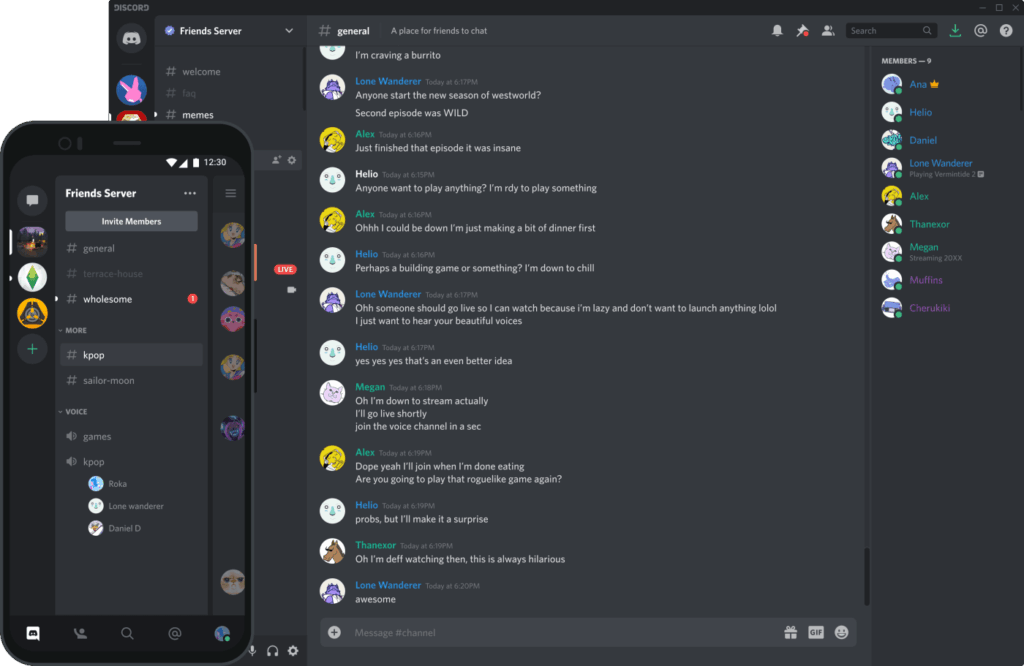
What is Discord? The popular community chat app

If you’re a gamer, you probably know what Discord is.

The group chat service, however, has now blown up well beyond its original purpose in the gaming world. Perhaps you’ve heard of Discord, though, and are still not quite sure what it is or what it’s for.

Look no further, Sixplusholdem.com will break down Discord for you right here.

What is Discord?

At its core, Discord is a web-based communication app. If you’re familiar with chat services like Slack, which many users are familiar with due to its widespread use in the business world, Discord is in the same category.

However, when Discord was first released by Jason Citron and ​​Stanislav Vishnevskiy in 2015, the app quickly became popular with gamers. Both co-founders worked within the video game industry and were looking to build a better communication tool. So, Discord finding a home amongst the type of users they had in mind made sense.

On Discord, users can participate in voice and video chats, send private text-based messages, and take part in communities, which are called „servers“ on the platform.

Did you know that we run a Short Deck server? You can find the link to join below this article.

Over the years, Discord has grown in popularity and has evolved from being a tool for gamers into a full-fledged service for anyone looking to chat or join online communities. Users can even start their own communities, aka servers, and invite users to join. Inside each server, users can set up channels dedicated to specific topics so that users on each server can congregate with others about the issues they’d like to discuss.

How much does Discord cost?

Discord is completely free to join. Yes, other chat services like Slack have free tiers with messaging limits.

Discord does not have any such limits. It’s completely free to use with complete access to your messages, history, communities, etc. And, furthermore, it’s free to start your own server too.

However, there are paid subscriptions for bonuses and perks.

For $9.99 per month or $99.99 per year, users can sign up for Discord Nitro. This subscription gives users access to free games in Discord’s store and provides platform extras such as animated avatars, custom sitewide emojis, larger file upload sizes and more.

For $4.99 users can subscribe to a cheaper version of the paid service, Discord Nitro Classic, which provides all the platform bonuses except the free games.

Perks, such as extra custom emojis or higher quality audio chats, can also be purchased for a specific server via a server boost. Each server boost costs $4.99. Two server boosts are included with a Discord Nitro subscription.

The two server boost included with the Discord Nitro sub are enough to grant your server access to the first tier. There are three total tiers with each bringing additional paid perks like more slots for custom emojis or even brand new bonuses like a vanity URL for your server.

Where can I access Discord?

Users can access Discord at discord.com and chat on their servers right within their web browser upon signing into their account.

There are also desktop applications for Windows and Mac computers, as well as mobile apps for iOS and Android devices.

How can I use discord for Poker?

There’s no better tool for building a poker community than Discord. You will find many poker servers for all sorts of games and sites, including our server with over 1k members and a decent amount of activity for a niche game like Short Deck is. 

Discord is a great tool to meet like-minded people and in terms of poker it’s ideal to learn strategy, share (poker) news or just have some small talk with fellow grinders. 

On our Short Deck Bootcamp Server, as we call it, we also run frequent promotions and giveaways as well as a very useful hand-discussion channel, where anybody from small to high-stakes can share any hand history and get very valuable feedback from other, more experienced members. 

What are you waiting for? Let’s grow the community and help each other become more successful poker players. 

Join the Shortdeck Bootcamp

The one secret to achieve your goals

When I was done with my coaching certification… 

I was terrified of asking people to pay for my coaching.

Why?

I had skills. I had knowledge. I had my certification. I had good reviews. I had experience. 

I had coached roughly 50 sessions for free.

But there was something holding me back from the next level.

And that something is the key to everything.

How many times have you tried to change?

How many times have you sat down to study…  

… only to find yourself opening social media, checking your phone, or realising that it’s better to clean the house?

How many times have you told yourself to focus on poker when you’re playing… 

… only to find yourself opening up youtube, discord, or other social media?

How many times have you told yourself that you want to exercise and eat more healthy…

… only to find yourself skip today’s workout and eat exactly what you did last week?

You consciously want to be better…

But your behavior is not aligned.

It comes down to one problem…

Your subconscious.

How your subconscious is keeping you stuck

Neuroscience has shown that we have two parts of our brains.

The conscious and the subconscious.

The conscious is the rational, logical, mind. 

The one you set goals with.

The subconscious is the ancient, emotional, habitual mind. 

This is what’s driving a lot of your behavior, without you really thinking about it.

Various research shows that roughly 95 % of our brain’s activity is subconscious.

It is created through patterns. 

Repeated thoughts, feelings, and behaviors that you have conditioned into your mind a lot of times.

This is now your identity.

Who you are.

Only problem?

We are not really aware of how we have ‘programmed’ this part of our mind.

Meaning you are likely to have limiting beliefs, emotional blockages, and disempowering behavioral habits, that you’re not really thinking about.

You’re just living it.

And let me tell you this.

It’s very difficult to get lasting results when your subconscious mind is programmed in a way that’s not aligned with your conscious goals…

Because then you start to…

  • Procrastinate…
  • Self sabotage…
  • Stay in your comfort zone…
  • Come up with excuses for why you don’t want to change anyway…

Sounds familiar?


The secret to it all

This is what most coaches fail to tell you.

They only focus on the surface level stuff… 

Like I did in the beginning.

Because I didn’t know better.

And that can be good…

But most often, it’s not really moving the needle.

What really moves the needle is to work with both the conscious and subconscious mind.

The conscious mind is easy. That’s the surface level.

So let me tell you how to rewire your subconscious mind.


How to rewire your subconscious mind

I use three techniques to work with the subconscious mind

  1. Meditation
  2. Visualization
  3. Coaching


Meditation

Research has shown that people who practice mindfulness meditation are better at seeing their subconscious patterns.

To meditate means to “become familiar with”. 

Subconscious means “below awareness”. 

Pretty good match, right?

It is an active training of your mind to become more aware of what’s going on inside of it.

When you train your brain to not just follow what pops up… 

But take a step back and observe it first… 

Then you have increased your ability to make a conscious decision.


Visualization

Visualization is one of my favorite tools.

Brain scans have shown how the mind can physically change simply by imagining something.

The effect is not as powerful as doing it in real life.

But it is a great short cut to condition your subconscious mind into new thoughts, feelings, and actions.

Remember, the more you do something, the more it gets ingrained into your subconscious. 

It is much easier to start to visualize your dreams … to visualize how you overcome obstacles … than actually jumping out of bed and doing it straight away.


Coaching

Coaching is a wide term. 

For me it means to help you get from point A to point B AND teach you how to do it yourself.

For me, asking questions is the heart and soul of coaching.

Coaching is more of a “conscious mind tool” but it can still make an impact on your subconscious.

Because coaching is great for clarity, perspective-shifts, and awareness.

Clarity and awareness is all about figuring out “who am I, and who do I want to be?”

This can lead to a shift in your perspective.

An aha-moment.

Aha-moments have the potential to instantly rewire the way you think.


What should you do now?

I want you to reach out to me if this post resonated with you.

I’ll help you get started with one of the three tools.

Join our discord and talk with Peter Rasmussen in one of our Poker Mindset channels or book a private coaching session.

GTO vs exploitative play

 
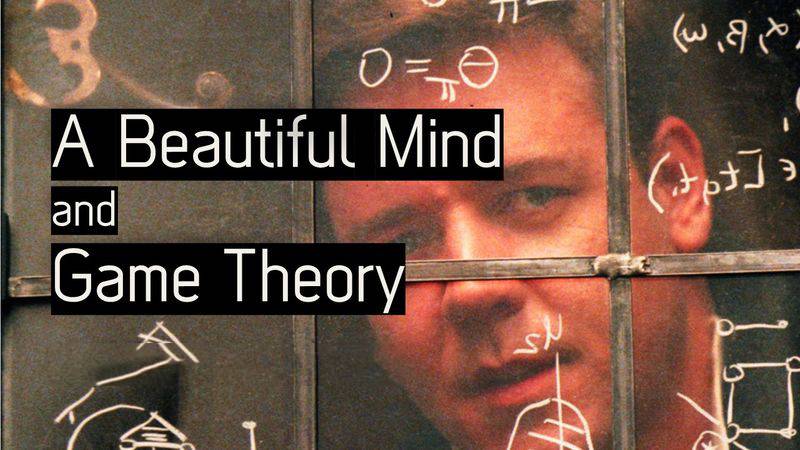
If you have been around poker for a while, you have heard of the term ‘’GTO’’. It´s actually not a new term. It´s based on the Nash Equilibrium, and was formulated in 1950 by mathematician John Nash. If you are interested in the math and history, there is a great movie about John Nash, called A Beautiful Mind with Russel Crowe. Nash equilibrium can be used to create unexploitable strategies for many different games. 
 
In recent years there´s been more and more advanced software developed, which can create solved GTO solutions for poker, and it has become an integral part of any serious poker player to understand GTO strategy.
 
Game Theory Optimal, in poker, is an umbrella term players use to describe the holy grail of no-limit holdem playing strategy, by which you become unexploited to your opponents and improve your winrate. It essentially solves the game. No longer do you have to think what to do, when you are in a limped pot vs button and flop comes AK6r. GTO tells you to bet, so you bet. It even tells you the exact sizing to use. Apply this to all spots and now you don’t even have to think. All the spots are solved like Tic Tac Toe.
 
As a player who studies with solvers and runs a GTO study group, I can confirm that studying GTO is important, but it is at the same time misunderstood and overrated. In this article I will try to explain how to study and apply GTO.
 

There are two main problems with GTO

  1. You can’t really learn it and apply to all situations, since the combinations, pot sizes, number of people is way too much. The human mind can memorize all the correct moves in Tic Tac Toe but cannot possibly learn even 10% of all GTO spots in 6+.
  2. GTO means a balanced, unexploitable play. It’s not the most profitable strategy. You can’t win versus GTO. But if you are playing at a 6-max table with four fish and one GTO bot, you will have a higher win rate vs fish, if you play exploitative.
 
Let me give an easy example. You have a player 100a deep open shoving every single hand. GTO doesn’t know that this guy is drunk and open shoves everything, so GTO charts tell us to call AQo and JJ+. But since you, as a player know his range is any two cards, you can easily call KTo and it’s a very profitable call, while GTO would consider calling KTo a huge mistake.
This is an easy example, but let me give you a slightly more complicated one. Say you are playing 6-max, everyone is 100a deep. everyone folds to HJ, he limps and CO limps and you are on the button. This is what we are supposed to do preflop.
 

GTO Charts (click here to read more about the GTO charts):

As you can see, we are never raising NON all-in with QJs, KQs. We jam KT, QTs and JTs. That is because, GTO doesn’t want to ISO and then fold to an all-in with playable hands like QJs. And GTO as HJ and CO has plenty of limp/shoves. This is what HJ is jamming vs CO limp and BTN 9x ISO (in red, picture below).
 
In real life, random players don’t jam near that much. Probably only AQo and better. So the correct play here is an exploitative one, non-allin ISO your suited KQ and play a pot with a good hand in position.
 
So naturally, the correct strategy is to mix GTO and exploitative strategy. This of course you knew already, so what is the point of writing all this stuff just to get to an obvious answer. Everyone knows the best strategy is mixed and adjusted. But here we will try to understand, in which spots you should go exploitative and in which spots you should stick with GTO, despite playing versus fish.
 

Improve your win rate with GTO

 
Let’s say you want to achieve the highest evBB possible in 6+. If you only want a nicer looking graph, there are a few small ‘’cheats’’ you can do, such as only learning one strategy (50a 6-max) and only playing that, and leaving the table as soon as it’s 5-max or as soon as you have 60+ ante. This way your bbEV will be high, but this is not the best strategy for making money, because you shouldn’t leave the table if your bbEV drops from 40 to 30, since 30bbEV is still better than your 0 winrate you have if you stop playing. So, for this scenario, let’s see how to achieve the highest bbEV on any table you decide to play.
 
Number one is, you should learn as much GTO as possible, for every spot, on all boards. But you shouldn’t follow it blindly. After learning GTO, when you are in a spot and thinking ‘’should I bet or check here’’, you should remember what GTO does. But then you should think further ‘’ok, GTO bets here, I remember. But why?’’. Then you have to remember the reasoning for the GTO play.
 
For instance, on a board of T96, turn 6, UTG vs BTN, GTO usually doesn’t double barrel as UTG when called by BTN. That is because BTN calls all 6x on the flop, and BTN has all 6x hands, while UTG doesn’t have almost any 6. So this 6 on the turn helps BTNs range. So in this spot you should remember that GTO checks, because that 6 helps BTN more.
 
Then the last step is to think ‘’Ok, I know what GTO does and why. Does this apply to this current hand?’’. So let’s say in this T966 turn scenario we have KQ, and we know that GTO tells us to check (I haven’t actually run this scenario in GTO, just using this to illustrate an example). We should analyze our opponent. Is he a regular who has studied GTO a lot and pretty much plays as he should? Then check, sure. But let’s say we are playing a nitty player that we know well. We know that he would fold J6, Q6, K6 and A6 on the flop because he doesn’t consider those hands good. And he will fold his draws (J8, etc.) on the turn, because he doesn’t want to chase draws on a paired board. Versus this player, we should realize that GTO analysis doesn’t really apply, because he doesn’t play close to GTO. That’s why checking KQ here and saying ‘’it’s literally GTO bro’’ is bad. We are losing a lot of EV when we decide not to double barrel vs this player.
 
So in each hand, you should go over these steps
 
  1. What does GTO do here?
  2. Why?
  3. Does this apply here?
 
There is a reason why regulars have 30-40a winrates vs fish, while GTO has 20aEV vs fish. It is because we are able to pick up more information than GTO – is this player ever capable of bluffing?, is he angry?, is he drunk?, timing tells etc.. Information that computers don’t know. The best regs know when to use all weapons.


Mindset is everything

In poker, there’s so much falling under the “mindset” umbrella.

  • Emotional management
  • Reframing / Perspective management
  • Focus
  • Motivation
  • Structure
  • Productivity
  • Goal management

… and so much more.

Take a good look at your poker mindset right now, and answer this question:

How well are you managing your poker mindset from 1-10?

When you are a winning poker player, you have to be professional.

You have to treat your mindset like a professional.


Where to start?

The good news is that there’s a very specific place for you to start to improve your poker mindset.

Working on this one thing is going to influence everything under that “Mindset Umbrella”.


And it is…


Drumroll…


Your thoughts.

Let me tell you a quick story.

I worked with a highly skilled coach for a period.

95 % of the time we solved my thoughts.

We uncovered limitations in my thinking. 

We found the holes that were creating negative results.

We explored new thoughts.I practiced thinking new thoughts on purpose.

That’s it peeps.

Behavior is a by-product of thoughts + feelings.

So when you commit to higher quality thoughts, you create higher quality feelings and then higher quality behavior follows.

So all of that…

  • Tilt
  • Lack of motivation
  • Feeling blue after a losing session
  • Being unfocused and distracted
  • Procrastination

… decreases all of a sudden.

Now don’t get me wrong. These elements will probably always be in your life to some extent. 

But when you learn how to manage your thoughts you create the ability to change everything in your life to the better.


One of the best exercises to start managing your thoughts

I learned this exercise from another coach. It’s called a thought download.

It’s really simple…

But really powerful.


Thought Download (do this for seven days in a row):

  1. Grab a piece of paper and leave it on your desk next to your keyboard
  2. After/during each session I want you to write down all the negative thoughts that appear in your mind. For instance:
  • Why am I so unlucky all the time?
  • I just can’t win a hand!
  • That guy is so lucky…
  1. After seven days you go through your negative thoughts. Identify the most limiting ones.
  2. Create two empowering reframes for each limiting thought you identified.
  3. Keep your reframes in front of you in each session. Practice thinking about them on demand.
  4. After a while your empowering reframes will be your new default and voila, massive sustainable change is achieved.

That’s it.

This is where you start to improve your poker mindset.

Doing this work is really simple. It doesn’t take a lot of time and energy. 

And it has the potential to change your life completely.

If you want feedback on your thought download, you can join the SixPlus Discord Community and write to me. I am happy to help!


Bonus exercise to help you getting started with your poker mindset

As per this date there’s a meditation challenge running in the SixPlus Discord channel. 

We motivate and help each other to meditate every day.  The challenge runs until April 1 2022. 

But new challenges will emerge after this one. So head into the SixPlus Discord Community and find the meditation challenge thread. Hope to see you there!

The Two Shockingly Easy Secrets to Stop Tilting in Poker

“Peter, I never tilt, it’s not a problem.”

If you say you never tilt, you’re probably lying (or very unaware).

Yes, I said that. Calling you a liar.

Tilt isn’t just “raging, shouting and beating your fist into the wall” after a bad beat.

Tilt is when you get affected by emotions and play worse than before.

Sure, frustration and anger are the usual suspects when we tilt.

But what about feeling bored? Feeling injustice? Feeling bullied? Feeling sad? Feeling lonely?

There’s a variety of feelings that can impact your winrate (often without you knowing it).

If you read this article, I’m sure that you will experience less tilt in the future and be able to win more money consistently.

Your tilt won’t disappear magically, but I can help you become aware about what tilt you experience and help you take control over your mind to reduce it.

How most players try to deal with tilt

“I normally try to realize when I tilt and tell myself to stop it”.

These are the words of one of my clients.

He’s a good NL200-500 reg and has a strong mindset.

But every time he tried to tell himself “do not tilt” it didn’t work.

Why?

Because it does not treat the root cause and it doesn’t offer him a better perspective.

And that leads me to the two most effective ways to stop tilt in poker.

Strategy #1: Create a tilt profile

It sounds boring to create a tilt profile. I get it.

And what is it anyway?

Well, a tilt profile is all about understanding your tilt and where it comes from.

“Peter, I know my tilt. I just get fucking angry and start playing bad”.

That’s not good enough.

I want you to expand your awareness. I want you to know why your tilt comes and the deeper roots behind it.

To make your tilt profile answer these questions now:

  • What are the trigger/s that make me tilt?
  • What emotions do I feel?
  • What situations in my life may be adding to the limiting state of this feeling?

Here’s an example:

  1. Triggers: Playing vs the aggressive reg who seemed to own me
  2. Emotions: I felt bullied. I felt weak. I felt like I was a bad player.
  3. Bigger picture: I guess this could have something to do with me being bullied in school. I experienced XYZ … and I now understand how experiencing something ‘similar’ on the poker table creates such an intense feeling in me.

Now these are golden nuggets. This is awareness on a new level.

Awareness is essential to start treating the root cause and not just put band aid on the symptoms.

Strategy #2: Choose your perspective

What creates tilt?

Your perspective.

Nothing else.

It’s not you being unlucky. It’s not you losing money.

It’s how you put your perspective on being unlucky or losing money.

Get it?

Let me give you an example.

What perspective do you think creates the most tilt?

“That guy is so fucking lucky all the time against me”

or

“Okay, he got lucky there. But if I keep playing my A-game I will eventually win over this guy. These situations are what allows me to make a living out of the game.”

The perspectives are on the exact same situation. You got unlucky, and villain won the pot.

It’s so important to realize that you can choose a perspective that helps you feel better.

It seems so simple, right?

But we often lose control over our thoughts in the heat of the moment.

That’s when we go down the rabbit hole of creating limiting thoughts.

Thoughts that lead to tilt.

Right now I want you to:

  1. Identify three thoughts that often occurs when you are tilting
  2. Write three reframes that helps you feel better

Ready, set, go.

Don’t skip it!

I get it. Reading about the work is much easier than doing it.

So now, I want you to make a conscious decision.

Decide to do the two steps now.

Don’t think about it. Grab a piece of paper or open Google Docs and write.

It has the potential to make your winrate explode and help you in more areas of life than poker.

I know that doing mindset work on your own can be tough!

Do you want help with emotional management, mindset and effective ways to deal with tilt (and much more)?

Reach out to me. You can learn more about me and my coaching at www.pokerlifecoach.com

I only have a couple spots left for clients, so no promises.

Join one of the best free communities for poker mindset work

Join the SixPlusHoldem Discord server today to learn more about the mental game of poker. We have a mindset channel where we discuss tilt, meditation, and other mindset strategies for being a better poker player. Take your game to the next level today.

See you there.

Your Mindset Coach
Peter Rasmussen

GTO play on A-A-7 (free multiway solve)

Here’s a look at how GTO (Game Theory Optimal) approaches this scenario on a board of A-A-7 rainbow. It was solved with our private multiway solver by our GTO coaches and we are happy to share this free solve with you. It was created for the students of the study group and if you like to learn a more GTO based playing style for 6+, you may check out our GTO Multi-way Solves Videos

So let’s jump right into the action. We are looking at a 5 way spot, 50Antes UTG vs MP vs BTN (CO & HJ folded pre).

First thing, we can notice is that UTG on this board bets quite a bit (65.5%) and the reason for that is because here UTG actually has a range advantage.

We can see that UTG has more pure Ax hands in its range as MP already starts to jam most of them preflop.

Second thing is that solver wants to use solely 33% sizing and the reason for that is, because UTG’s range hits so well on this board that it basically can go range betting almost whole range (Solver is not because then bluff frequency will be too high and MP’s response for that will be to start x/raising tons of hands but in real-games we can range-bet 80%+ of our range, in particular, with 2 backdoor hands where we can barrel a lot on turns until people figure it out and adjust.

In real games people won’t be defending enough, in particular, hands like KQ, KJo, KTo and maybe even not pocket pairs like 66, 88, 99. For what it’s worth we definitely should call against this sizing all pocket pairs even against biggest nits who we know always has Ax there because of pure pot odds.

It’s true that in real-games people might not be jamming preflop as wide also, so argument could be made that MP will still have tons of Ax hands in its range but then in-game we can check MP’s VPIP frequencies and chances are that MP is overlimping as well, hands like Q9, K9, J9, J8s, Q8s etc. Also, even against more Ax saturated range 33% bet from UTG is very profitable bet and doesn’t need to go through so often to make it a profitable play.

This is BTN’s calling range and I think it’s very close to what people would call in real games – Ax, pocket pairs and flushdraws.

If we take a look at MP’s and BTN’s raising ranges then for both they are very similar – always 77 and then for MP its 98ss, 97ss and for BTN A7 and then Solver adds some bluff-raises with blockers for balance.

In real-games I don’t think we have to balance this as people wont be able to make a note of this and if we hold 77 and there are bets in front of us, there is no way that people will fold Ax here after we raise.

To make it more interesting – both players (MP & BTN) calls UTG’s flop bet and we go to turn. There is a pattern on two different turn classes: on high card turns without spade (A, Q, K,) UTG continues barreling on turn because it has nut advantage on these high card turns and also very likely that UTG’s AQ and AJ are still good.

Whereas on low card or/and spade turns UTG now checks its range because it was betting flop pretty wide and once called by 2 players it wants to slow down as on turn it has wider range versus 2 narrower calling ranges where it doesn’t have nut advantage.

now versus bets UTG just pretty much calls some flushdraws (mostly combo draws) and Ax hands.

On high card turn its a bit more interesting though, this is what UTG continues barreling with, important note with bluffs like QTo, JQo, JTo is that we want to do this without a spade so there is a bigger chance that villain has a flushdraw instead of Ax hands.

This is UTG’s jamming range on river.

On river UTG bluff catches with weaker Ax, in particular, with ones not holding a spade and jams for value better Ax hands such as AJ and AQ. Bluffs mostly with 66 as it unblocks MP’s folding range as MP doesn’t have any FDs missed having a 6 in them (K6s, Q6s etc folds preflop).

Exploitatively I like going really small on the river with bluffs (like 12Ante) just to fold out missed flush draws but of course its not solver approved play, because if we do not merge our sizings we open ourselves up for being exploited.

Interesting and cool thing about UTG’s range advantage is that if UTG decides to check OTF and MP bets then UTG goes for raise 41.2%

Then if it gets called by MP it proceeds with very similar strategy and pattern as we discussed previously – barrels more on high, non-spade turn cards and checks a lot on spade and/or low turn cards.

Happy if you made it this far! 🙂 This was, as mentioned, a free multiway solve (either text + images or in form of a video) from the GTO study group and if you like to learn more, feel free join our Discord channel if you have a question regarding GTO or anything  6+ related.

Thanks for tuning in and good luck on the tables. 🍀