GTO Heads-up Preflop Charts
Since some of you prefer the GTO approach to the game, which is a more essential part as the lineups get tougher, we have created our first GTO HU preflop charts for 50a and 100a.
Полный набор чартов стартовых рук (все части)
Это полный набор, включающий в себя все шесть опубликованных нами частей, состоящий из чартов для глубины стэков 100-200а на 5-6 макс столах, а так же чартов для глубины 50-75а для 5 макс столов. Часть 1 (первое действие), часть 2 (против рейза/изоляции), часть 3 (рейз против лимпов) и часть 4 (3ех и 4ех сторонние выставления), а так же часть 1 для стэков 50а (первое действие) и часть 2 (изоляция против лимпов)
Так же включает GTO Хэдз-ап чарты для глубины стэков в 50 и 100 анте
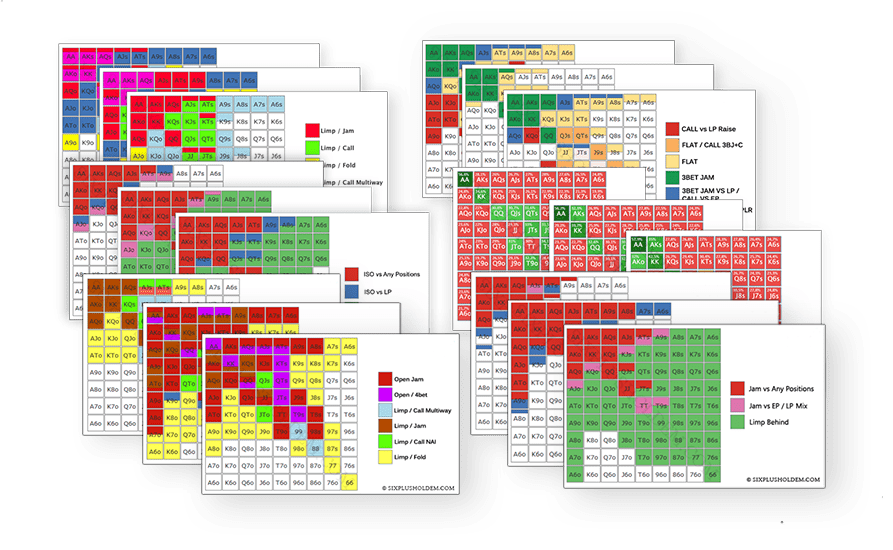
Больше информации о чартах Вы можете найти в описании каждой части, резюмируя, PDF-файл будет состоять из:
- Диапазоны для ситуации First-in для пяти позиций (UTG/UTG+1, MP, HJ, CO)
- Трехстраничное руководство с ценным материалом по стратегии и пояснениями к чартам, такими как сбалансированные диапазоны, динамика стола, позиционная игра
- Пять чартов для игры против открытия рейзом «VS OPEN RAISE» (UTG+1 против OPEN, MP против OPEN, HJ против OPEN, CO против OPEN, BTN против OPEN)
- Четыре чарта для игры против изоляционного рейза «VS ISO RAISE» (MP против ISO, HJ против ISO, CO против ISO, BTN против ISO)
- Руководство на четырех страницах с ценным материалом по стратегии и пояснениями к чартам, такими как олл-ины в мултивей потах, играбельность рук, примеры раздач и подробное описание того, как читать чарты и понимать обозначения.

- 10 чартов для ситуации «Изоляция лимперов» (“Isolation raising vs. limps”) (MP против 2 лимперов, HJ против 1, HJ против 2, HJ против 3, CO против 1, CO против 2, CO против 3, BTN против 1, BTN против 2, BTN против 3 или более лимперов.)
- Таблица эквити рук, при помощи которой, можно определить с какими руками следует коллировать, когда оппоненты делают лимп/олл-ин против вашего ISO-рейза, и как мы действуем с определенными руками.
- 8 страниц ценного стратегического контента, включая анализ диапазонов лимп/олл-ин в oRanges 6Plus Calculator при глубине стеков 150a и 200a, пояснения обозначений в чартах и многое другое.
- Четыре чарта для 3 сторонних олл-инов с диапазонами двух оппонентов к каждой таблице (против стандартного диапазона, против широкого пуш диапазона, против узкого пуш диапазона обоих игроков, против узкого пуш и стандартного диапазона колла)
- Чарт для 4 сторонних олл-инов с тремя диапазонами оппонентов (против стандартных диапазонов 3 игроков)
- Четырехстраничный гайд со стратегией, объяснениями чартов и примерами рук.
- 6 страниц ценного стратегического контента (игра по позиции, лимпы, диапазоны пушей с примерами рук и т. д.), а также подробное описание того, как читать чарты и понимать обозначения.
- Четыре чарта FIRST IN (UTG, MP, HJ, CO)
- 5-ти страничное руководтсво с ценной информацией по стратегии (динамика стола, балансирование диапазонов, игра по позиции, итд), а так же пояснение как читать таблицу и понимать ее значение.
- 9 таблиц стартовых рук «исо-рейз против лимпов» (MP vs 1, HJ vs 1, CO vs 1, BU vs 1, HJ vs 2, CO vs 2, BU vs 2, CO vs 3, BU vs 3 лимпера)
Пакет 100a GTO ХА включает в себя:
- Двухстраничное пособии как использовать GTO чарты (объяснения, смешанные частоты, рандомизация, размеры стэков и терминология)
- Девять чартов для глубины 100а Хэдз-Ап (CO OPEN, CO vs ISO, CO vs 3B NAI, CO vs 3B SHOVE, BTN vs LIMP, BTN vs OPEN, BTN vs LIMP SHOVE, BTN vs 4B, BTN vs OPEN SHOVE)
Пакет 50а GTO ХА включает в себя:
- Двухстраничное пособии как использовать GTO чарты (объяснения, смешанные частоты, рандомизация, размеры стэков и терминология)
- Девять чартов для глубины 50а Хэдз-Ап (CO OPEN, CO vs ISO, CO vs 3B NAI, CO vs 3B SHOVE, BTN vs LIMP, BTN vs OPEN, BTN vs LIMP SHOVE, BTN vs 4B, BTN vs OPEN SHOVE)


Полный набор чартов стартовых рук (все части)
Если вы хотите оплатить покупку с помощью других методов оплаты, свяжитесь с нами по адресу contact@sixplusholdem.com. Мы принимаем платежи на Skrill, Neteller, GGPoker P2P или Crypto.
По любым вопросам, относительно этих чартов рук, или при наличии интереса к более глубокому пониманию игры префлоп и постфлоп, присоединяйтесь к нашей группе discord по изучению игры @Shortdeck Bootcamp
Чарты стартовых рук для глубины 50 анте ч. 2 (Изоляции против лимперов)
В этой части чартов, освещен очень важный аспект игры, а именно исо-рейз против лимпов. В случаях с изолированием лимперов крайне важно знать диапазоны, так как подобные случаи регулярны в 6+ холдеме.
Low – Mid Pocket Pairs in 6+
In this article we will have a deeper look into low to mid pocket pairs and how they perform in the great game of Six Plus Holdem.
Hands from pocket 6s to pocket 10s are the ones in question and many people tend to overplay those, mostly by calling a large isolation raise out of position. Other common mistakes are raising those first in or against limpers. Unlike in regular NLHE, we barely ever flop an overpair and even if we do so, we are not a big equity favorite against the majority of villains calling range. This being said, pocket pairs are played to flop a set which is going to happen roughly 17% of the time, compared to 12% in no-limit hold’em.
Let’s look at some hand examples to get a better understanding:
Hand ex. 1:
Hero: 88
Flop: 8-9-T rainbow
Villains get it in range: 99, TT, QJ, TJ
If we give villain a tight GII range we would only be having 49% equity, if we add hands such as KJ & AJ, we are a 59% favorite. This example shows you that a low set on a lockdown board is fairly vulnerable and is oftentimes running into bigger hands.
We can still set mine in many spots, but we should consider folding our low pocket in scenarios where we are out of position against a decent regular, or when we are heads up, unless you are facing a weaker opponent. The reason is obvious, a good regular will unlikely stack off with top pair, so even if we hit our set, we are not getting the right implied odds to set mine profitably. On aggressive tables we could even fold pocket 6s and 7s from early position, first in.
How do we perform with mid pockets in all-in scenarios?
Here’s another example to illustrate that we are rarely ever in great shape if we would be getting it in with a mid pocket pair against a somewhat standard shoving range, if we face an open shove or a limp/shove after we decide to ISO raise with a mid pocket pair:
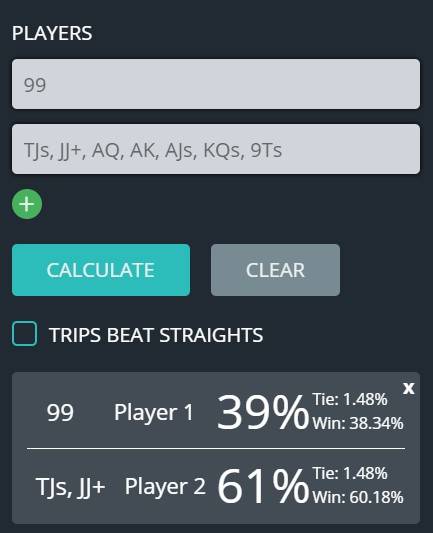
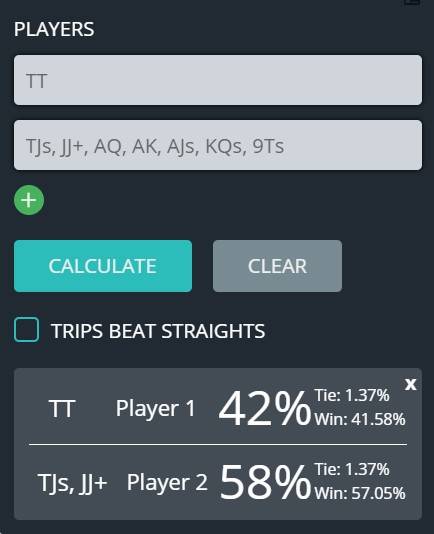
Keep Note: This doesn’t mean that we would not be shoving with a hand like pocket tens ourselves, especially if we had around 50-75 antes. If you are interested in how to adjust your preflop ranges with more shallow stacks, you should check out our 50 ante Vol. 1 & 2. It gives good insights on how to play first in and against limpers, with a stacksize of 50-75 antes.
Below is the first-in Hi-Jack position from our volume 1 50 ante SHC first-in:
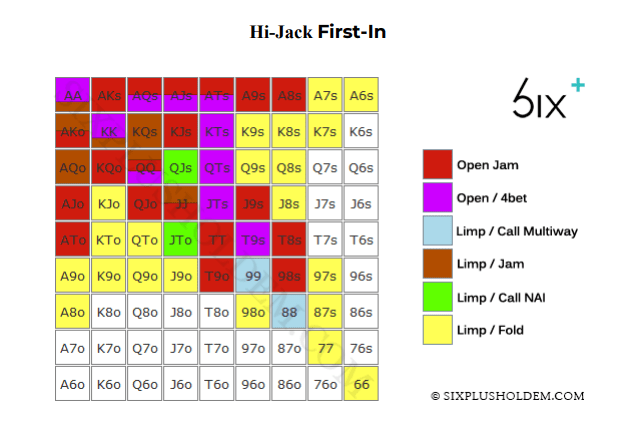
You can see that a hand like TT is +EV to open jam, while 99 or 88 should be a limp/call multiway. If we are facing only one raise and we would end up heads up, they should go into the muck, unless we are facing a small ISO raise and/or our opponent is a weaker player.